America’s Classes
&
An Emerging National Emergency
Excuse us for living, but we the oldest of the Baby Boomers, born in 1946, have seen our country at its best. We grew up in the 1950’s and the 1960’s were our “coming of age” years. We have as the bookends of our lives the Great Depression and World War II on the one end and September 11, the Afghan and Iraq Wars and the Great Recession on the other end. And what represents the future of America and where we are headed may just be hinted at in the Occupy protest movement. It is in that movement that we can see the frustrated outgrowth and result of America’s classes today and an emerging national emergency.

It began as “Occupy Wall Street” in New York City’s Zucotti Park, September 17, 2011. Quickly it spread by October 9 to Occupy protests in over 95 cities & 82 countries.
Richard Florida is the author of a new book, The Rise of the Creative Class Revisited, published in September 2012. He is a professor at both the University of Toronto and New York University as well as senior editor of The Atlantic. In that book Richard Florida describes America’s post-industrial society as having three main classes instead of the more traditional version attributed to Karl Marx as the capitalists vs. the working class. The author breaks down American society as follows:
1. The blue-collar working class: 26 million, 20+ % of the work force (down from 50% in the 1950’s).
2. The service class: 60 million, 47% of the work force, the largest class and worst paid. – – food services, janitorial, childcare, eldercare, clerical and routine administrative.
3. The creative class: 40 million, 33% of the work force, earning 50% of all wages and salaries in the U.S., and controlling 70% of discretionary income.
Florida argues that while both presidential candidates accuse each other of “stooping to class warfare,” neither candidate is addressing the problem. America has become class-ridden. He goes on to describe how “this widening class divide” has become “one of the nation’s gravest dangers.”
The author goes on to show us how it is the division of classes that shapes most aspects of our American daily life: red vs. blue states, Democrats vs. Republicans, liberals vs. conservatives, secular vs. faith based, smoking, obesity, fitness, dental care, gun violence. In essence, America’s deepening class divide affects every facet of our lives. It influences beyond wealth and health, but virtually what we think and believe.
Richard Florida’s prescription is that we need a new economic and jobs policy. He says we must upgrade over 60 million low-wage service jobs. To do so, he concludes, we must “invest in and cultivate the full talents of all workers as the source of higher wages, improved competitiveness and greater growth.” He then declares, “We’re running out of time.”
What Richard Florida is saying is not new and has been repeated throughout history and the ages. The most blatant example in the extreme is the French Revolution of 1789. It is replete with images of the radical Robespierre, the guillotine, the rise of the bourgeoisie or middle class, just to name a few. The most accurate term that describes the process is not one that endears many. It is the redistribution of wealth. The subject can be argued and fought over but its eventual triumph must emerge and always does. For, without the periodic redistribution of wealth the masses will not settle down so that society may go forward with economic productivity in an orderly fashion.

VJ-Day, August 14, 1945, Times Square, New York City. This is the famous photo by Alfred Eisenstaedt of the sailor & the white-clad young woman.
Excuse us for living, but those of us Baby Boomers can give witness to our more civil redistribution of wealth in our lifetime. It was known informally as the G.I. Bill after World War II. Formally named the Servicemen’s Readjustment Act of 1944, it provided a range of benefits for returning World War II veterans. Benefits included low-cost mortgages, loans to start a business or farm, cash payments for tuition and living expenses to attend college, high school, or vocational education. By the end of the program in 1956, 2.2 million veterans used the G.I. Bill to attend college and 6.6 million more used the benefits for some kind of training.
Thus, Americans were given a path to move up the ladder and into the middle class via the G.I. Bill. Richard Florida is right! We need a new policy, new legislation or a series of new laws, perhaps tied to some kind of national service, to lift Americans up and out of the lower classes and into the dreams of the middle class and upper middle class and beyond. May America find its way once again!
Comments: Please!
Sources: Daily Record, a Gannett newspaper of Morris County, New Jersey, article by Richard Florida, September, 2012.












 Excuse Us for Living
Summer Edition
For All of July 2012
Dewey Beach & Reading Suggestions
Excuse us for living, but this will be year #15 vacationing for a few weeks in Dewey Beach, Delaware! Pictured above left, is the Surf Club, an efficiency hotel where we vacationed 13 years. To the right, Sun Spot, a condo next door, is where we moved over to for year #14 and this year #15. Delaware beaches remind us of the New Jersey shore in “days of old,” a little less populated and less regulations and more freedom on the beaches. Starting from taking the Cape May-Lewes Ferry all the way down to Ocean City, Maryland, the Del Marva Peninsula has something for everyone; Lewes, Rehoboth, Dewey Beach, Bethany, Fenwick and Ocean City. What does the area offer? – – Upon our return in the “Excuse Us…” August Post!
“To me history ought to be a source of pleasure. It isn’t just part of our civic responsibility. To me it’s an enlargement of the experience of being alive, just the way literature or art or music is.” David McCullough
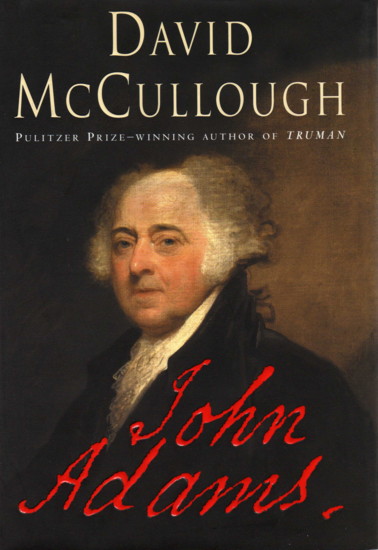
Excuse us for living, but we will cover David McCullough’s first 5 books here and his remaining 4 books in an August 2012 Summer Edition! Where do I begin, but to say I discovered that there was a David McCullough in my life watching TV. It was a Ken Burns documentary, “The Great Bridge,” 1982, about the Brooklyn Bridge, narrated by David McCullough. Since then, his voice has become familiar, going on to host the “American Experience” series on PBS twelve years on other historical subjects. The Ken Burns program was based on David McCullough’s book, the tome, The Great Bridge, 1972. I was “hooked.” I had to read it. I had to see and walk The Bridge. The book’s remarkable detail was a frustration at first and then the author’s obsession for his subject became my own. You have to remind yourself that this was not supposed to be the building of a monument but a utilitarian bridge: from the wire rope manufacturer of Trenton, New Jersey, John Augustus Roebling, and builder of cable wire suspension bridges, to the planning and transfer of responsibility for the project to his son, Colonel Washington Roebling, as Chief Engineer, to the story of the grand Caissons supporting each tower, to its completion. – -A project the technology for which did not exist, yet they built it anyway! As if that were not obstacle enough, the project had to also survive the corruption of the infamous Boss Tweed and Tammany Hall politics! David McCullough completes an exhausting narrative that made you sorry it had to end 14 years in its building with the opening of the Brooklyn Bridge in 1883.
If I thought I was “hooked” on the Brooklyn Bridge, now I was really in trouble to fulfill my historical curiosity. – –The Johnstown Flood, 1968. Now why did McCullough spend his time writing on, I wondered, such narrow historical topics? Little did I know that this was actually his first book. He spent twelve years writing for Sports Illustrated, the United States Information Agency, and American Heritage. He struggled to complete this first book of his writing part-time. And having been born in Pittsburg, Pennsylvania, David McCullough came from “a hop, skip, and a jump” to the west of Johnstown, PA. Anyway, the Johnstown flood was one of the most devastating disasters in American history. David McCullough’s account of the events leading up to the disaster is mesmerizing, killing over 2,000 townspeople in 1889. – -And all because of an earthen dam that had been hastily rebuilt to create a lake for an exclusive rural lodge or men’s club for the industrial tycoons of the day, the likes of Carnegie, Frick, and Mellon, to name a few. His portrayal of this terrible saga has become to my surprise one of my favorite books.
With the success of “Johnstown” and with encouragement from his wife, Rosalee, David McCullough decided to become a writer full-time. That’s when he wrote The Great Bridge, followed by another narrow topic, The Path Between the Seas: The Creation of the Panama Canal, 1977. It was a detailed, fascinating tome of a book describing the history and building of the canal between the Atlantic and the Pacific Oceans from 1870 to 1914, going back to the failed French efforts. To put it mildly, the struggle against yellow fever and malaria were as great a feat as the marvel of engineering and construction. Add to these the administration of the project, the politics, diplomacy, show of military might, and theatrics of Teddy Roosevelt, and you have one hell of a book!
Next came Mornings On Horseback, 1981, a book which still leaves me almost speechless to describe. It read like a fiction novel, it is so lyrical in storyline. And yet, it is the biographical story of the life of Theodore Roosevelt, from 1869 to 1886, only a span of 17 years, before he was “Theodore Roosevelt.” – -I mean, the TR we associate as the 26th President of the United States! But it also includes his childhood, college years, his political beginnings, the cowboy years in the Dakota Territory, and especially life in New York City and in bucolic Sagamore Hill on Oyster Bay. – -What a dessert of a book! I love this book!
Somewhere along the way I read his next book, Brave Companions, 1992. It was not without annoyance that I turned to this strange collection of essays, written over a period of twenty years, just as I had been annoyed with David McCullough’s selection of other narrow topics, but for a different reason. – -Essays and no dates of publication for each one! By now David McCullough was becoming more of a friend than an author to me. I had a right to be mad at a friend, hadn’t I? – -Until I read the little volume. It quickly became another of my favorite books with essays on great people in history normally not written about from science, industry, literature and the arts to travel and places to visit and what to see. – -even recommendations for doctoral dissertations and topics on which to write books! Amazing!
We will let you consider these first 5 books of David McCullough to choose from for a great read that suits your interests. But hurry! The August 2012 Summer Edition of “Excuse Us…” will finish up with his other 4 books that may be equally compelling to you! We better hurry! One never knows when David McCullough will pop up with another book on some obscure topic I will learn to love!!!
Comments: Please!
10 Comments
Posted in Announcement, Book Reviews, Commentary